Reaching your financial freedom number is only half the journey. The other half is living off your capital for decades without running it down, including during bad years on the stock market. Here is how to organise your withdrawals in practice.
The 4% rule, a reminder
According to US studies from the 1990s, withdrawing 4% of a balanced portfolio in the first year, then the same amount adjusted for inflation, historically allowed capital to last at least thirty years in the vast majority of cases. For freedom that starts early, many prefer to aim for 3 to 3.5%. The site's calculator lets you test these rates.
The real danger: sequence risk
Two people can earn the same average return over thirty years and end up, one rich, the other ruined. The difference: the order of good and bad years. A sharp market fall in the first years of withdrawals forces you to sell many securities at low prices, and the capital sometimes never recovers. This is sequence-of-returns risk.
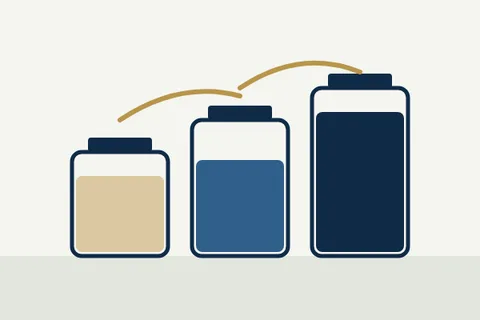
The three-bucket strategy
- Cash bucket: one to two years of expenses in a savings account. This is what you draw on each month.
- Cautious bucket: bonds or low-volatility investments, two to five years of expenses. It refills the cash bucket.
- Growth bucket: stocks, ETFs, REITs. It refills the other buckets in good years.
During a year of sharp falls, you live on the first two buckets without selling your shares at the bottom. You refill them once markets have recovered.
Organise your capital into three buckets
Adjust the number of years in reserve: the larger they are, the less you sell during a crisis.
Flexible withdrawal rules
- The guardrail: cut your withdrawals by 10% in a year when the portfolio has fallen sharply, and allow yourself a little more after a very good year.
- Floor and ceiling: set a vital minimum and a maximum spending level, and adjust between the two.
- Extra income: some income from an activity you choose, even modest, greatly reduces pressure on capital in the early years.
Income that does not require selling
A portfolio that produces regular income reduces the need to sell securities:
- net rent from a rental property;
- dividends from stocks, distributing ETFs or REITs;
- interest from bonds or savings accounts;
- the state pension and supplementary pensions, later on.
Withdrawal order and tax
In Belgium, since 2026, gains realised on financial assets are taxed at 10% above an annual exemption of about €10,000. Spreading your sales over several years to stay below this threshold can reduce tax. Dividends, on the other hand, bear the 30% withholding tax. Depending on your situation, taking exempt capital gains can therefore cost less than living on dividends. Other countries have different allowances and rates: run the numbers with an adviser.
Review the plan every year
- Take stock of your capital and the year's actual spending.
- Refill the cash bucket.
- Rebalance the buckets.
- Adjust next year's withdrawal amount.
Where to find these services
- MyPension.beYour future Belgian pension income
- Wikifin (FSMA)Preparing your retirement income (French and Dutch)
Links provided for information, with no partnership. Always check a provider's terms and authorisation before committing.
Test yourself
3 questions to check what you remember. Click an answer: the explanation appears straight away.
Question 1 of 3What is sequence risk?
The order of good and bad years matters as much as the average return.
Question 2 of 3What is the cash bucket for?
It is refilled during good years.
Question 3 of 3What does the annual exemption from the Belgian capital gains tax allow?
Since 2026, gains are taxed at 10% above about €10,000 a year.
Frequently asked questions
What is sequence risk?
The risk that a sharp market fall at the start of the withdrawal period forces you to sell many securities at low prices, to the point where the capital does not recover, even if the long-term average return is fine.
How do you avoid selling shares in the middle of a crisis?
By keeping one to two years of expenses in cash and a few years in cautious investments, and living on these reserves during falling years.
Which withdrawal rate should you choose for early financial freedom?
Many aim for 3 to 3.5% rather than 4%, because the capital must last more than thirty years and tax reduces what you receive.
This article is educational and is not personal investment, tax or legal advice. Figures change: check them with the sources cited or a licensed professional before deciding. Read the full disclaimer.